
And Then We Go Party At The Shore
And Then We Go Party at the Shore is a surreal 3D narrative adventure about losing yourself and inhabiting the lives of others. Trapped inside a mysterious theater after their identity is stolen, O must exchange heads with strange performers, uncover new perspectives, and solve riddles across four theatrical acts. Each borrowed identity changes how others respond, making roleplaying itself the key to unraveling the world’s mysteries and reclaiming who you are.
Contribution
As a Programmer, Designer, and Project Manager, I led technical development in Unity and coordinated production across programming, design, and art. I implemented the core Head Exchange system, synchronizing identity changes with character animations, dialogue states, and mini-game outcomes. I built a reusable Yarn Spinner command framework that connects dialogue to gameplay actions and allows conversations to wait for events to finish. I also developed asynchronous scene preloading and portal traversal, preserving player position and orientation between environments. Alongside programming, I contributed to identity-based puzzle design and managed production planning and team communication.
*The project received NYU Game Center Incubator funding.*
Category
3D RPG Game
Role
Project Manager
Programmer
Designer
Dev Time
May 2025 - Now
Made With
Unity
Gameplay
Design Process
Early Concept:
The Kiosk and Other Worlds
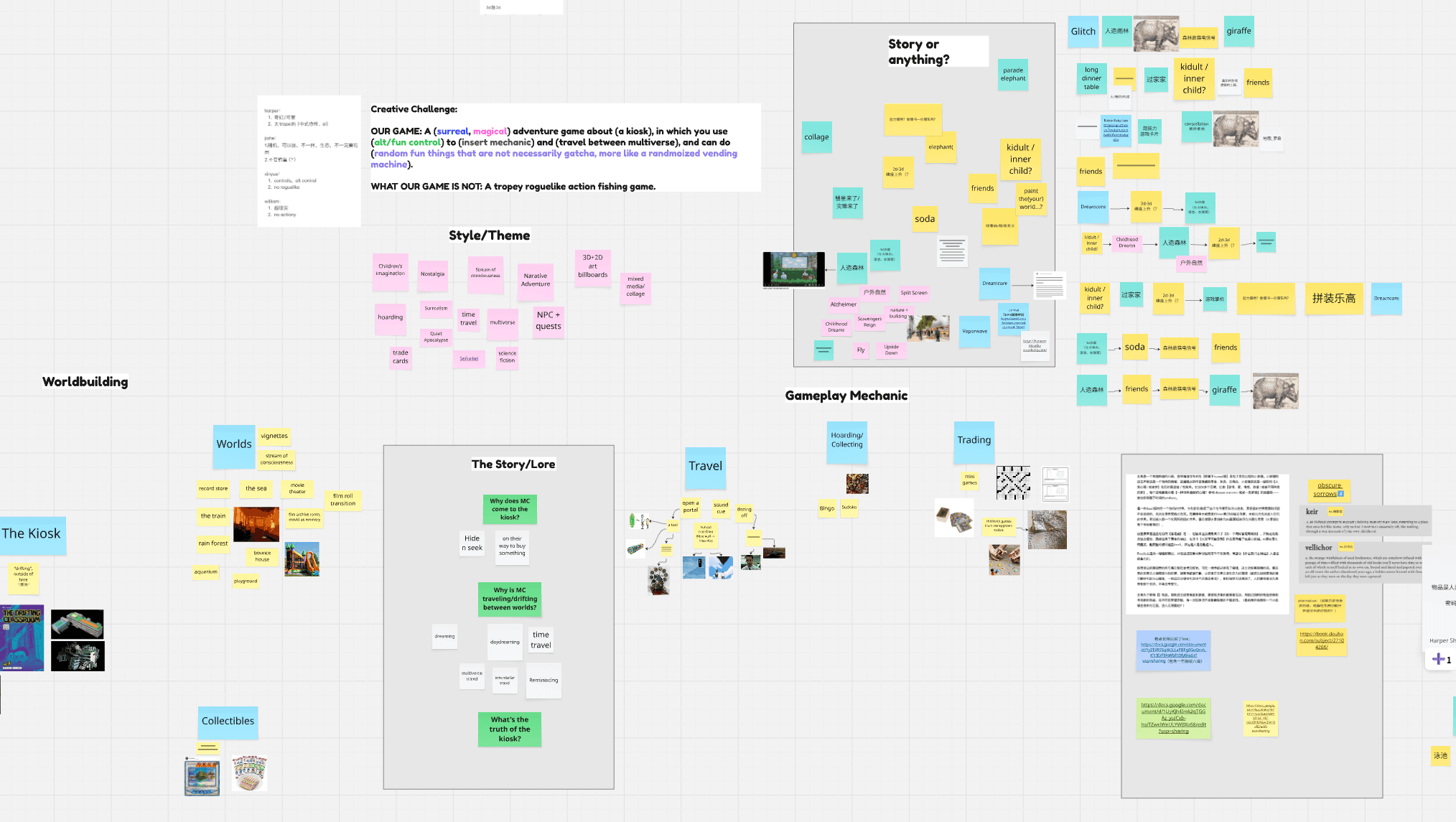
Our earliest concept centered on a surreal kiosk—an ordinary place that could become a gateway to extraordinary worlds. We explored collecting, trading, and playful interactions with snacks and drinks. In one developing concept, consuming an item would transform the player’s appearance, head, or clothing. Mirrors, water, screens, and glass could then reveal their new reflection and provide access to a corresponding world. An aquarium, a record store, a train, and a film archive were among the settings we considered, alongside themes of childhood, memory, and identity. The protagonist’s background, the shopkeeper’s role, and the journey’s ultimate purpose were still open questions. However, this concept established an early foundation for the later head-swapping mechanic: changing how the player appeared could change the places and experiences available to them.

As ideas came together, a new direction took shape...
The Theater Concept:
The project shifted toward handcrafted theater and roleplaying, an intermediate story followed an artist who became lost on the way to a wilderness residency and entered a traveling troupe’s warehouse theater. Initially assigned a background role, the protagonist would be corrected by the director whenever they departed from the script. Discovering another performer’s script backstage introduced a way forward: borrowing and exchanging scripts allowed the player to inhabit different characters, understand their roles through others’ reactions, and complete tasks to progress between acts. The motivation later shifted from escaping the theater to recovering O’s stolen head and identity. In the later Margo version, the journey became more personal: O was an unfinished, headless doll whose creator, Margo, had not yet decided who they would be. After Margo became lost in the woods, her doll came alive within her dream and began searching for its missing maker. The theatrical worlds drew from her experiences—a forest, a sandcastle, a circus souvenir, and family life—while taking on other identities became part of O’s journey toward understanding others, forming connections, and discovering a sense of self.


Moodboard


Cool Features I Programmed
Scene Transition Portal
Head(Identity) Swap Feature
And... EVERYTHING!